


result
Face-to-Face
Department of Otolaryngology – Head and Neck Surgery Newsletter


April 2026
A Letter from the Chair
Innovation thrives at Houston Methodist Otolaryngology – Head & Neck Surgery


Mas Takashima, MD, FACS
Sylvia and James E. Norton
Distinguished New Century Chair
Professor and Chair
Department of Otolaryngology
– Head and Neck Surgery
Houston Methodist Academic Institute
Innovation is deeply embedded in the culture of Houston Methodist. Across the institution, there is a shared mindset of continually asking how we can improve the care that we deliver and the way we practice medicine.
Houston Methodist is recognized as one of America’s Most Innovative Companies by Forbes and has been honored by Fortune for its commitment to pioneering advancements that enhance patient care and improve operational efficiency.
At the same time, true innovation requires thoughtful evaluation. New technologies must be carefully vetted to ensure they meaningfully improve patient outcomes and clinical practice. At Houston Methodist, we strive to balance enthusiasm for innovation with the discipline to rigorously evaluate whether new tools truly benefit patients.
Throughout my time in medicine, I have witnessed several transformative advances that have reshaped the way we practice otolaryngology. One of the first innovations of my time was the introduction of the CT scanner – a computer-generated, image that allows clinicians to visualize structures inside the human body with unprecedented detail.
As technology evolved, CT imaging improved dramatically in both resolution and speed. At the same time, surgical navigation systems were developed, functioning almost as a GPS for the surgeon. These systems allow us to map the anatomy in real time during surgery, enabling more precise localization of tumors and safer navigation through complex anatomical variations.
Today, we are now witnessing yet another leap forward. With Houston Methodist’s strategic partnership with Apple and KARL STORZ, a pioneer in endoscopic technology, a new platform has been developed that integrates ultra high-resolution imagery with immersive visualization tools. The platform allows surgeons to interact with surgical displays in an entirely new way, creating a highly adaptable operating environment designed to enhance precision, ergonomics, and safety.
One of my colleagues in general surgery, Patrick R. Reardon, MD, FACS, has been studying this platform for laparoscopic surgeries. However, until recently, the technology had not yet been used for endoscopic sinus surgeries.
We have now become the first institution to establish an Institutional Review Board (IRB)–approved prospective study designed to systematically evaluate and validate the clinical utility of this platform in endoscopic sinus surgery. From a surgeon’s standpoint in a four-hour surgery, ergonomics becomes very important. In long surgical cases, neck strain, posture, and screen placement can all impact both performance and fatigue. With this platform, I can position the endoscopic surgery display anywhere within my visual field – right in front of me, closer to me, higher or lower – creating an optimal setup tailored to my comfort.
This system also allows multiple windows to be displayed simultaneously – the image-guided screen in one area, the endoscopic surgery view, pathology microscopy could appear within the same visual environment, along with the endoscopic view from any operating room that may facilitate assisting with any intraoperative consultations.
The flexibility of the system is extraordinary. If a structure requires closer examination, the virtual display can be expanded dramatically, essentially creating a floor-to-ceiling surgical monitor. The result is an immersive environment that allows surgeons to maintain intense focus on the procedure.
After a successful first surgery using the Apple Vision Pro, I then advanced to a four-hour highly complicated sinus surgery with little room for manipulation. In this virtual platform, you can adjust the virtual environment, helping to lock in your focus. Then, my individual ergonomic adjustments helped me come out feeling great. My neck feels fine; my back is fine; I’m not excessively fatigued. I had many options to play around with the screens and figure out the best comfort for me – up or back, left or right.
In addition, we were able to vet and identify issues with the platform but also document all the benefits.
In the end, we recommended some tweaking of the platform along with changes to the color saturation of the virtual monitor, but the procedure could not have gone any better.
Augmented and virtual reality represent the next major frontier in endoscopic surgical innovation. These technologies create immersive environments that improve focus, ergonomics and create new possibilities for intraoperative visualization. Based on my experience, the potential is extraordinary. My vote for this innovation is a resounding “yes.” It was really exciting to use the new platform, and I look forward to seeing how these technologies continue to transform surgery in the years ahead.

Dr. Takashima Named Director of National Board
Mas Takashima, MD, FACS, a nationally recognized leader in rhinology, skull base surgery, sleep surgery, and otolaryngic allergy, was named recently to the leadership of the American Board of Otolaryngology – Head and Neck Surgery (ABOHNS). Dr. Takashima, Professor and Chair of the Department of Otolaryngology–Head & Neck Surgery at Houston Methodist Academic Institute and Weill Cornell Medicine, joins the prestigious 17-member board for a five-year term and will be eligible to serve another five years. The board establishes the strategic direction and sets the policies for all the activities of ABOHNS. Directors are elected based on their unique expertise as well as personal qualities, leadership abilities, and engagement with the national organization. Dr. Takashima brings to the board his interests in educational innovation and the integration of artificial intelligence into physician training, education, and patient care. Dr. Takashima was certified by ABOHNS in 2003 and elected to the ABOHNS Board in March.
LEARN MORE


Speech Therapist Speaks at Symposium
Teresa Procter, SLPD, CCC-SLP, MM, spoke at the Arts in Healthcare Symposium at Houston Methodist Hospital on March 26. She discussed Speech-Language Pathology Services for vocal artists and her experiences with the Houston Methodist Texas Voice Center.
in the news

Research Spotlight
New genetic evidence suggests chronic rhinosinusitis is not one disease but many. Dr. Omar Ahmed shares how uncovering racial and genetic diversity in CRS could pave the way for more precise, personalized care.
READ MORE
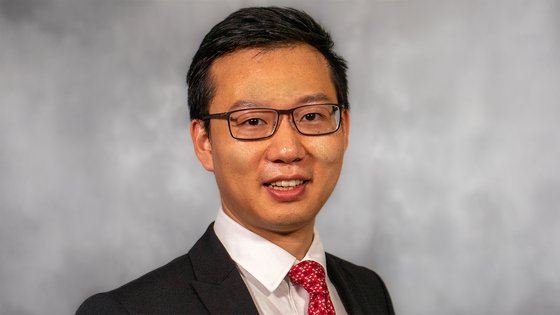
Departmental Spotlight
Renjie Hu, PhD, a data scientist at Houston Methodist, is advancing patient care by applying artificial intelligence and machine learning to rhinology research, including chronic rhinosinusitis and personalized medicine.
READ MORE
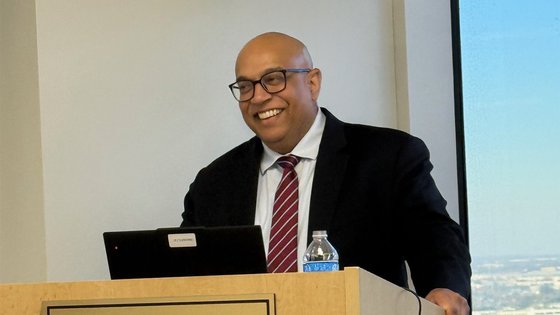
Visiting Professor Spotlight
Jayakar V. Nayak, MD, PhD, explores how finding your “micro niche” — where passion meets opportunity — can unlock impact, expertise, and lasting career fulfillment.
READ MORE
Feature story
Experts Work Hand in Hand to Make Houston Methodist’s Modified Barium Swallow Program Unique
With more than 24 years at Houston Methodist, Nesreen Alawami, MS, CCC-SLP, leads the Modified Barium Swallow Program at Houston Methodist ENT Specialists, providing expert, evidence-based care for complex swallowing disorders. Her specialized training and advanced diagnostics help patients — often after stroke or cancer treatment — regain safe swallowing and improve quality of life.

The Department of Otolaryngology – Head and Neck Surgery
Click here

Departmental Education
Our mission is to provide the best patient care experience while training students, residents, fellows and physician scientists
CLICK HERE

Sign up for The Department of Otolaryngology – Head and Neck Surgery newsletter
Sign up