


result
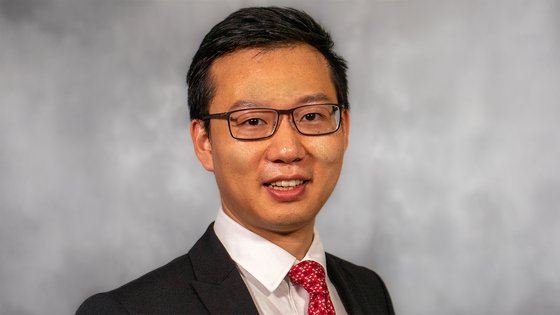
Renjie Hu Travels Surprising Path to Research at Houston Methodist
When Renjie Hu, PhD, lost his sense of smell during the uncertainty of COVID-19, he found himself in the exam room of Omar G. Ahmed, MD, associate professor, Division of Rhinology and Skull Base Surgery and director of clinical research for Houston Methodist Department of Otolaryngology – Head and Neck Surgery. Call it irony; call it fate – either way it was a surprisingly lucky day for Dr. Hu.
“In the very early years of my career as a professor, I knew I needed to find more people to collaborate with in the healthcare domain,” Dr. Hu said recently. “During COVID, I saw Dr. Ahmed for my loss of smell that had gone on for a month. I wondered if there was a potential for damage to the nerves.”
Later, Dr. Hu said, it dawned on him that Dr. Ahmed was knowledgeable in some of the same areas where Dr. Hu had been doing research. Dr. Hu decided to reconnect with Dr. Ahmed to discuss their mutual research areas.
“We both had a vision of advancing care of patients through artificial intelligence and big data,” Dr. Ahmed said. “However, he (Hu) was lacking the clinical insight, and I was not as well versed in some advanced data analytics. We came together and combined our powers,” Dr. Ahmed said.
“We are working on some really fascinating projects that will eventually advance care for rhinology patients,” Dr. Ahmed added.
From there, Dr. Ahmed introduced Dr. Hu to Mas Takashima, MD, FACS, chair of the department of otolaryngology– head and neck surgery, to see how his research could benefit otolaryngology. In this rising era of artificial intelligence (AI), Dr. Hu brings more research to the field than most other experts because of his long-time interest in data science, machine learning and AI.
“Dr. Hu’s abilities are interesting,” Dr. Takashima said. “He is able to use AI to create algorithms so that we can harness more data and use it more efficiently, especially for personalized medicine. There’s an overwhelming amount of data available already. Now add to that the increased use of wearables. Individuals are adding their personal data automatically and it, too, needs to be connected and assessed for usable strategies.”
Since beginning their collaboration, Dr. Hu, Dr. Ahmed and Dr. Takashima have published seven papers together in leading rhinology journals, presented their work at multiple major rhinology conferences, and submitted two grant proposals to the National Institutes of Health (NIH).
Dr. Hu has been an assistant professor at University of Houston for almost five years. He is an adjunct professor of otolaryngology – head and neck surgery at the Houston Methodist Academic Institute (HMAI). He received his Doctor of Philosophy in Industrial Engineering from the University of Iowa and his masters in Operations Research at Columbia University.
At the University of Houston, Dr. Hu leads the Applied Data Science Lab, where his team develops machine learning methods that integrate imaging, genomic and clinical data to better understand complex diseases. Over the past three years, five PhD students and four master’s students from Dr. Hu’s lab have participated in collaborative research projects with Houston Methodist.
“I'm dedicated to using machine learning to solve problems in medicine, nursing, and neuroscience,” he said. “All of these fields share a lot of common techniques. I especially hope to bring a machine learning point of view to chronic rhinosinusitis (CRS).” Dr. Takashima is an expert in chronic rhinosinusitis. Both Dr. Takashima and Dr. Ahmed have conducted groundbreaking studies to unravel the origins and the broader health implications of CRS, a condition that affects 12 percent of the national population.
Dr. Hu is using his skills to determine whether certain genes will cause somebody to get CRS. Ultimately, he hopes these studies will help make a diagnosis as early as possible, eventually preventing the condition entirely and lightening the burden on the healthcare system.
Also at the University of Houston, Dr. Hu focuses on multimodal machine learning. He has developed a series of machine learning algorithms for use across different areas of research.
Hu was born in China and came to the United States at age 22 to continue his education. When he gets away from the lab, he works out at the gym and swims.


